4 November 2026
Why 61 in 100 freelancers have been left unpaid, and how to avoid being one
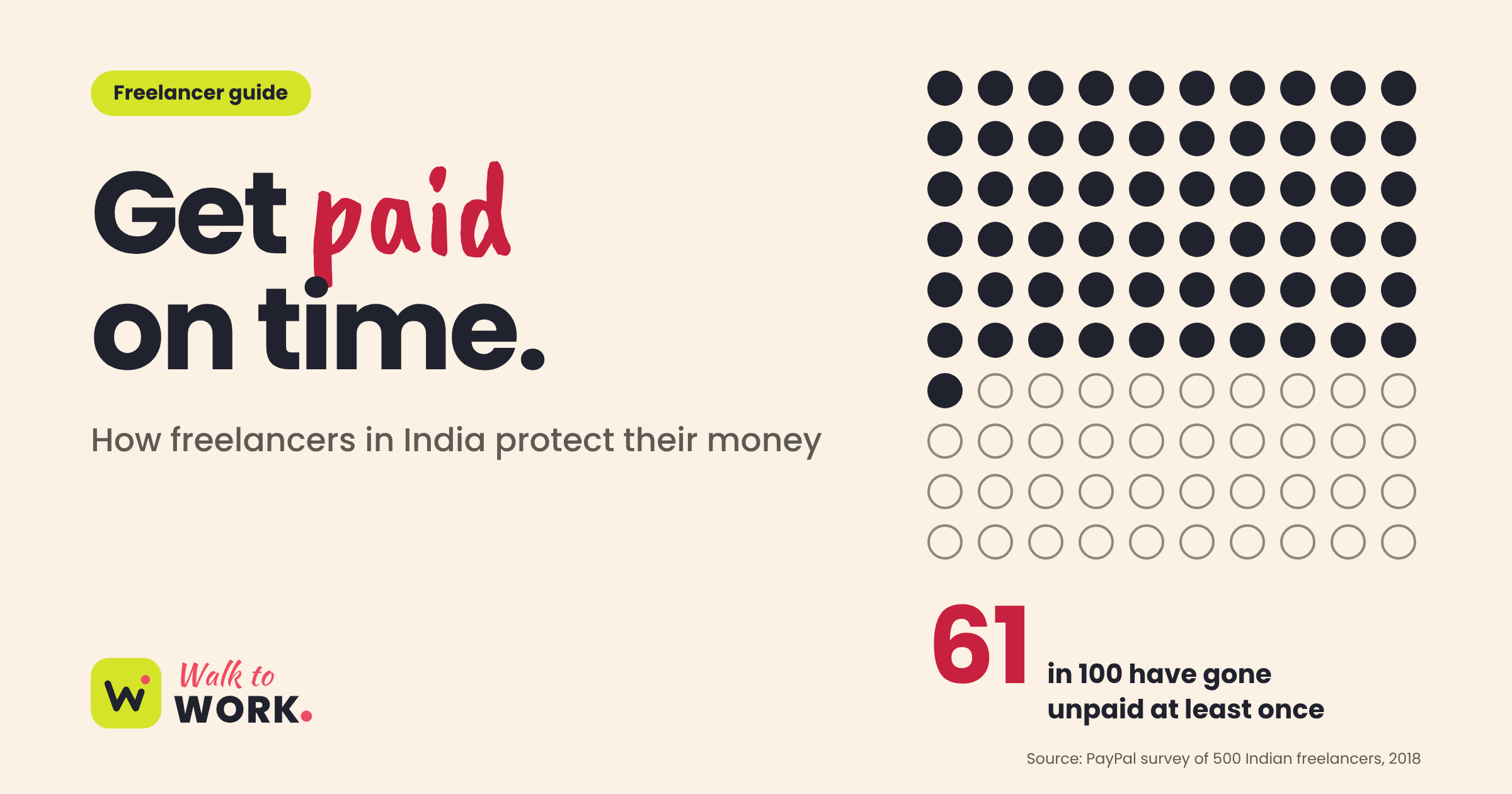
If you freelance in India, odds are you have chased an invoice. A PayPal survey of 500 Indian freelancers found that about 61% had gone unpaid at least once, and many waited two to four weeks to be paid even by clients who did pay. This post explains why that happens and the five habits that protect your money.
The problem is bigger than one bad client
In 2018, PayPal surveyed 500 Indian freelancers. About 61% said they had gone unpaid at least once in their career. Many of the rest still waited two to four weeks after sending an invoice. The survey is a few years old, but anyone who freelances will tell you the story has not changed much.
It is not only freelancers who feel this. A 2025 report by GAME, FISME and C2FO found that small businesses in India were still owed about ₹7.34 lakh crore in delayed payments as of March 2024. Late payment is a problem across the small-business economy, and many freelancers are paid by those same businesses.
The market is also growing fast. NITI Aayog expects India's gig and platform workforce to grow from 7.7 million to 23.5 million by 2029-30. That is a lot of new freelancers who will learn about late payments the hard way, unless something changes.
Why it keeps happening?
Most freelance work in India still starts the same way: a call, a WhatsApp chat and a verbal "yes, go ahead". That feels friendly, and it is how trust gets built. It is also where the trouble starts.
• The scope is never written down. When the client sees the work, "two logos" has become "five logos with changes", and the freelancer cannot prove what was agreed.
• Payment is promised after delivery. Once the files are handed over, the freelancer has no leverage left, and the client has little reason to hurry.
• There is no neutral third party. If the client goes quiet, the freelancer's only option is to keep sending polite reminders.
• Chasing money feels awkward. Many freelancers, especially those starting out, worry that asking will cost them the relationship, so they wait.
Five habits that protect your money
You do not need a lawyer or special software to protect yourself. These five habits work for a designer, a photographer or a tutor.
1. Write the scope down before you start. A short message is enough: what you will deliver, how many revisions are included, and the deadline. Ask the client to reply "agreed".
2. Take an advance. For most projects, asking for 30% to 50% upfront is normal. It shows the client is serious and covers your time if they disappear.
3. Split big jobs into milestones. Tie each payment to something the client can see, such as the logo concepts, the first draft or the first five reels.
4. Keep the final files until the final payment. Share watermarked or low-resolution previews while the work is in progress.
5. Send a proper invoice with a due date. Put the amount, the date and how to pay. A clear invoice is harder to ignore than a chat message.
None of this is rude. Clients who work with professionals usually expect it.
How Walk to Work builds this in
We started Walk to Work because these habits are hard to keep up alone, especially when you are busy doing the actual work. So we built them into the platform.
• Clear scope and timeline. Every order and every brief spells out what is included and when it is due, so both sides start from the same page.
• Payment held until delivery. The client pays first, the money is held safely, and it is released to you when the work is delivered. You are not left chasing it.
• You set your own rates and packages. Your craft, your rates, your terms.
• Free to join. There is no sign-up fee and no monthly fee. We earn only when you earn.
• Found across India Businesses can discover your profile, send you briefs and book you for events and workshops.
We take accountability for the outcome: scope, timeline and payment are sorted before work starts.
If you freelance, teach or create for a living, create your free profile and put your craft on the map. You can see how everything works at walktowork.in.
Sources
• PayPal, "Insights into the freelancers ecosystem", survey of 500 Indian freelancers, January 2018, via YourStory.
• GAME, FISME and C2FO, "MSMEs' Access to Finance and Timely Payments" (₹7.34 lakh crore in delayed payments, inflation-adjusted, as of March 2024), via Storyboard18, November 2025.
• NITI Aayog, "India's Booming Gig and Platform Economy", June 2022, via Indbiz.